Written by Eve Leupold
Photos by Rebecca Shaid
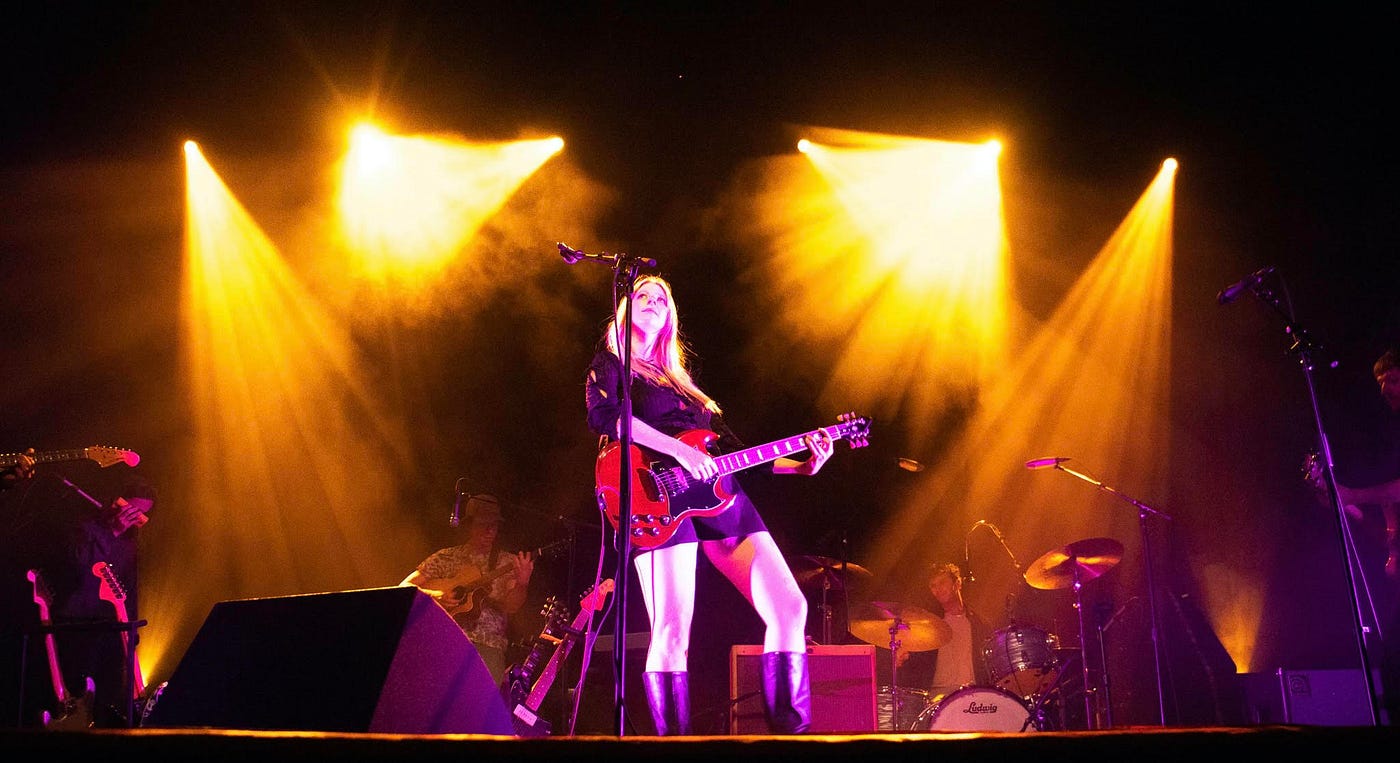
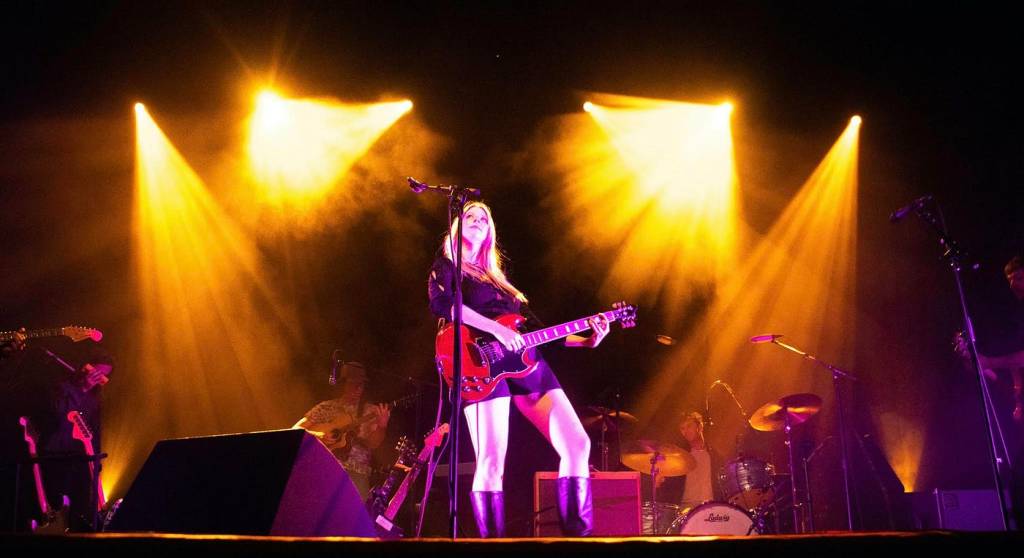
It’s November 11, 2023, and I’m standing in the middle of a packed crowd at Thalia Hall in Chicago. The seminal, up-and-coming rock band, Slow Pulp, is about to perform their biggest hit, “High.” Tonight marks the closing leg of their tour, which followed the release of their new record, “Yard.” The concert is almost over; the tour is almost over. Lead singer Emily Massey addresses the crowd. She wants us to sing this one along with her.
She then admits that the New York show brought out the loudest crowd she’s witnessed on-tour– thus far, at least.
Massey knows what she’s doing. I watch as people put down their drinks, pause their side conversations, and pocket their vapes, getting ready to belt the lyrics to the most quintessential Slow Pulp banger. When the seeping guitar starts to play and Massey grabs the mic, we’re all ready to show her– and Thalia– and each other– and, most importantly, New York City–what we’ve got. “I have too much in my pockets, I wish they were empty…” A single, unified voice rings around the concert hall, echoing and resounding. At the end of the song, Massey assures us that we won the Loud Contest. Hopefully she isn’t just appeasing us; to Chicagoans, any music-based competition involving a “New York crowd” is nothing to joke about.
Writing this review, I considered the lyrics of “High,” which I have listened to enough times to know by heart. I love the song because it speaks to the swelling consternation often underscoring small moments and feelings. For example, in “High,” Massey conveys the panic induced by being just a little too stoned; she sings, “My shirt sits on my body, like it’s not for me…and now I’m trying to find my way out, I wish I knew how.” The disorientation of this moment is heightened by steely guitar and Massey’s harmonic, sizzling vocals. Listening to “High,” one can clearly imagine and embody the experience which the song effectively conveys: one of intoxication-induced discomfort and, underneath that, a kind of hot, buzzing inner turmoil.
The Chicago-based rock band Slow Pulp has a particular knack for depicting complicated experiences and emotions in their music, expanding upon the common anxieties afflicting young people in the 21st century. In her music, Massey writes about getting excessively high, being a “bitch,” (as quoted from “Yard,” a new hit off of their latest album), how easy it is to fall apart, and the challenges and pitfalls of learning to treat oneself with respect. Slow Pulp’s music refracts these experiences into a million different sounds and cadences, exposing the soul’s inner chaos through shattering guitar chords and Massey’s grounded, aching Mezzo-soprano.
Considering the intense rock-band energy of Slow Pulp’s music, which never refrains from leaning into its signature, clashing noise, I was surprised by the group’s chill energy on stage. Massey did most of the talking, describing her love for Chicago and complaining about getting her period right as the band passed over the border into Wisconsin. In Massey and the rest of the troupe, I sensed an honesty and openness that undoubtedly lends itself to their music. Slow Pulp is not afraid of honest emotion, oftentimes directly addressing themes of despair, heartbreak, and growing up.
Speaking of growing up, this topic is especially prevalent in Slow Pulp’s newest record, “Yard.” My favorite song on the album — and one of my favorite performances that night — was none other than that of the eponymous track, which explores the utter strangeness of the modern coming-of-age experience. I appreciate the band’s decision to incorporate more piano into the songs on the “Yard” album. As the band plays, the piano stabilizes the intense guitar solos and opens up sonic space, highlighting Massey’s spotless vocal performance. “Yard” exemplifies this shift, opening with a few frank piano notes before Massey starts to sing. At one point, Massey asks, “they put the house ‘for sale’ sign up, did you know that I cared that much?” That line particularly strikes me as an evocative illustration of the simple pain that accompanies change. The feeling of nostalgia is both enhanced and complemented by the perennial piano notes, which maintain a repetitive melodic riff until the song ends. The painstaking insistence of that piano reminds me of another aspect of growing up: despite the fact that “they put the house ‘for sale’ sign up,” despite the fact that you’ve been “selfish” or “a bitch,” life continues. You continue. And time inevitably marches on.
I enjoyed the Slow Pulp show; even more so, I enjoyed the band’s talented lyricist, vocalist, and front-woman, Emily Massey, who will undoubtedly experience a burgeoning career and upward success within the music industry. Listen to the new Slow Pulp album if you’re feeling nostalgic, worn-out, young, tired, or just a little bit too high. And try to catch them the next time they’re on tour near you; if you sing loud enough, you might just beat New York.
 WNUR Wavelength