Written by Eve Leupold
Photos by Rebecca Shaid
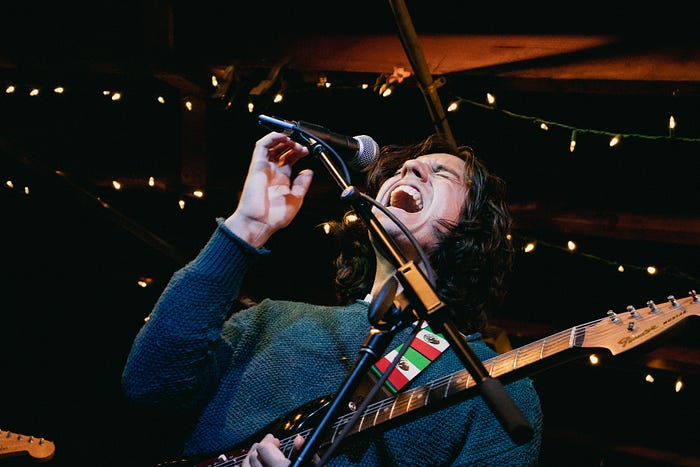
In the summer of 2022, a friend put me onto the French Cassettes song “On/Off” — a ricocheting ballad which documents the end of a tumultuous relationship. The lyrics especially resonated with me, effectively conveying the ambiguous nature of on-again, off-again situationships (my favorite line: “we liked to pretend there was something wrong…”). From there, I started listening to more of their music and fell in love with their sophomore — and arguably most successful — record, Rolodex. Encompassing characteristics of both alt-rock and pop, their music occupies a genre somewhere in between The Backseat Lovers and The Strokes; their greatest hits, such as “Utah” and “Santa Cruz Tomorrow,” are characterized by acute, echoing guitar strings and the dynamic vocal register of Scott Huerta, the Cassettes’ lead singer and frontman.
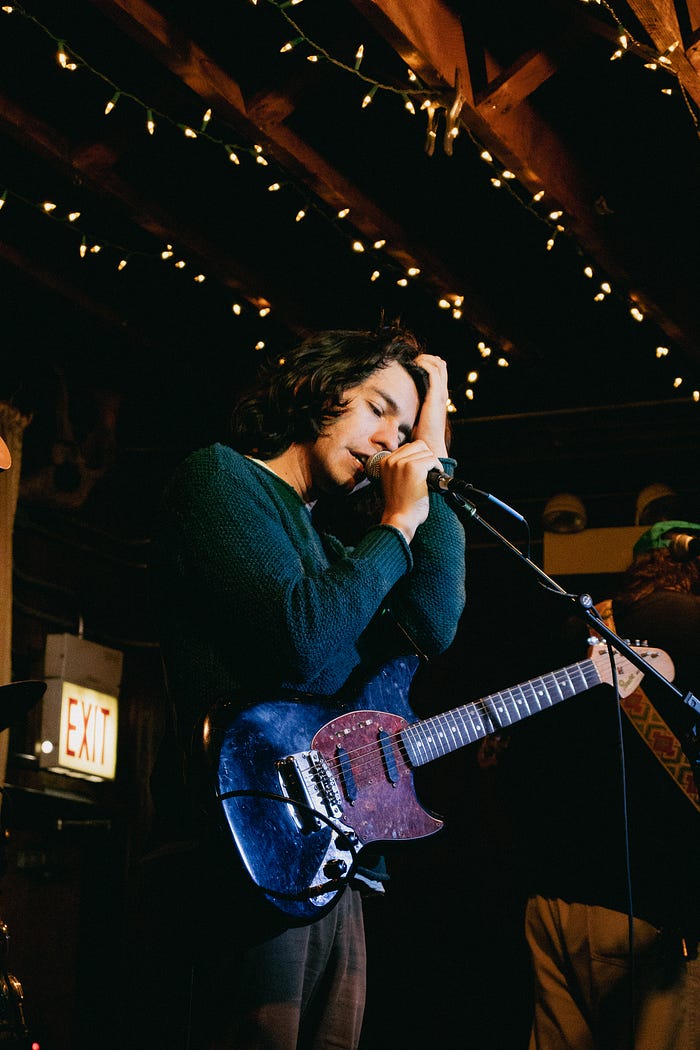
On the night of October 4, I arrived at the Hideout Bar in the Industrial Corridor along Chicago’s North River to watch the French Cassettes play. The bar is situated adjacent to a stretch of soccer fields, with a thatched wooden roof and a little enclave in front for bar-goers to drink and mingle when the weather’s warm enough. Inside, the space was ambient and insular, softly buzzing with voices and lamplight. I couldn’t help but feel a little bit confused: was this actually where the French Cassettes, whose top songs have accrued millions of listeners on Spotify, would be performing?
It turns out that a deceivingly small venue like the Hideout was perfect for a musical group like the French Cassettes. When it comes to performing, the band adopts a uniquely intimate approach, ditching the normal glitz and glam of showbiz for casual performances that feel more like reunions than concerts. Case in point: the stage space was concealed behind two nondescript swinging doors at the back of the bar, and standing next to those doors, behind a makeshift table covered in homemade merch, was none other than the band’s lead singer, Huerta. Looking casual in a knit sweater, Huerta was selling merch through venmo and introducing himself to concert-goers. I, myself, had the privilege of chatting with him (we bonded over our shared connection to my home city, San Francisco, where the French Cassettes was conceived). When it was time for the band to come on, Huerta literally hopped out of the crowd and onto the stage, nonchalantly swinging into their first set.
One of the early highlights of the concert was when Cassettes performed a personal favorite, “Dixie Lane.” Huerta swooned around the mic, his movements following the careful fluctuations in his voice. He sang the quintessential refrain, “cemetery, cemetery, cemetery, cemetery…” The nostalgic melody was complimented by twinkling guitar strings and a lowkey, swaying tempo. The band’s performance was undoubtedly strengthened by a tangible bond between its members, characterized by an internal rhythm and balance which subsequently helped to put the audience at ease. Guitarist Mackenzie Bunch remained relaxed and in-tune, while Andrew St. Jame’s backup vocals helped to stabilize Huerta’s intense, straggling vocals. People who appeared to be close friends of the performers stood at the front of the crowd, waving their hands in the air and singing with supportive gusto. Together, the three performers grew increasingly relaxed and confident, building towards an easy-going vibe that made it easy to sway along to.
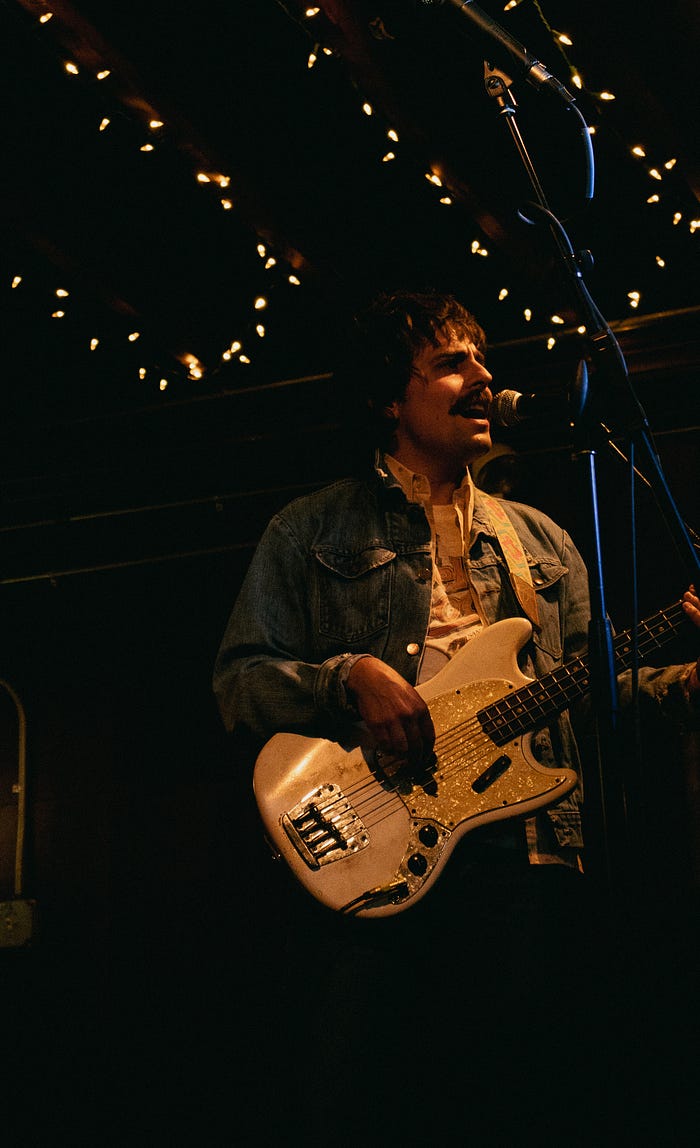
One of the highlights of the show was when Huerta shared a personal anecdote which inspired the lyrics to their latest demo. Huerta described how he has recently struggled to write songs about personal and emotional topics. During one such attempt, Huerta recounted how “part of the way through the song, I was like…remember that one asshole who cut you off on the freeway that one time?’” From there, Huerta shared a demo from his latest song-in-progress: a peaceful, reflective acoustic melody which abruptly diverts into an angry condemnation of the driver who cut him off on the freeway. This summed up something I appreciate about the Cassettes: their ability to walk the line between the personal and the personally humorous, demonstrating an uncanny refusal to take themselves too seriously.
After an enthusiastic encore, the Cassettes closed out their show with “Utah,” a crowd favorite and arguably their greatest hit. The audience was buoyed along by Bunch’s terse, emotional guitar notes and Huerta’s quavering tenor. We all sang together, I almost cried, and then, after a little bit over an hour, we were released to go back to our lives. It was a great concert and a memorable experience. I, for one, can’t wait to hear what the Cassettes have in store.
 WNUR Wavelength